On‑Page SEO Checklist for 2026
The ultimate on‑page SEO checklist for 2026. Learn how to optimize titles, meta descriptions, content, images, internal links, and Core Web Vitals to rank higher on Google.
P&P CONNEKTS
3/10/20262 min read
On‑page SEO is the foundation of search engine optimization. It refers to all the actions you take directly on your website to improve visibility and rankings. In 2026, Google’s algorithms are smarter than ever, focusing on user experience, content quality, and technical performance.
This checklist will guide you through every essential step of on‑page SEO, ensuring your website is optimized for both search engines and users.
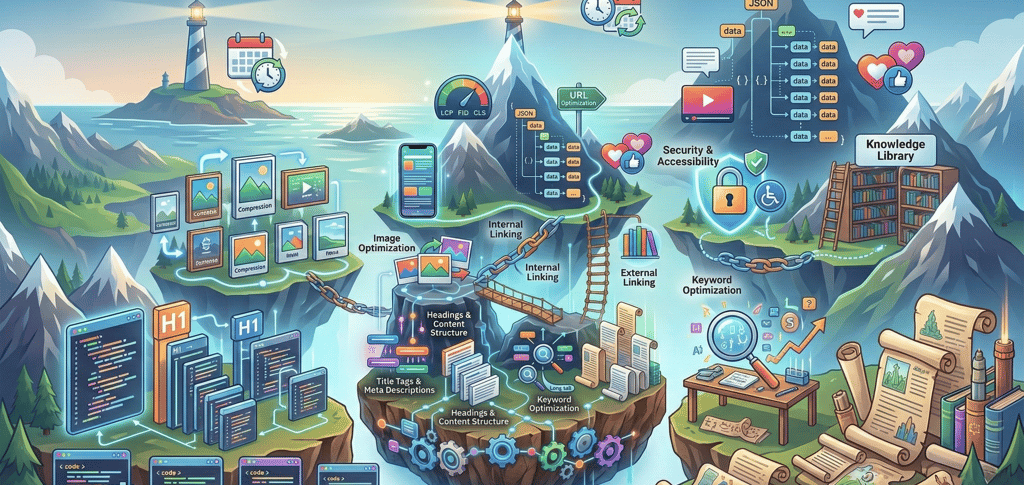
1. Title Tags & Meta Descriptions
Include primary keywords naturally.
Keep title tags under 60 characters.
Write meta descriptions under 160 characters.
Make them compelling to increase click‑through rates.
2. Headings & Content Structure
Use H1 for the main title.
Organize content with H2, H3, H4 subheadings.
Ensure headings include keywords but remain natural.
Break content into short paragraphs for readability.
3. Keyword Optimization
Focus on long‑tail keywords relevant to your niche.
Use semantic keywords (LSI) to cover related topics.
Avoid keyword stuffing—maintain 1–2% keyword density.
Optimize for voice search queries (conversational phrases).
4. Content Quality & Length
Aim for 1,500–2,500 words for blog posts.
Provide unique, valuable insights.
Add examples, case studies, and statistics.
Include FAQs to target featured snippets.
5. Image Optimization
Use alt text with descriptive keywords.
Compress images for faster loading.
Use WebP format for efficiency.
Add captions where relevant.
6. Internal Linking
Link to related blog posts and service pages.
Use descriptive anchor text.
Maintain a logical site structure.
Avoid orphan pages (pages with no internal links).
7. External Linking
Link to authoritative sources (news sites, research papers).
Ensure external links open in a new tab.
Avoid linking to low‑quality or spammy sites.
8. Mobile Optimization
Ensure responsive design.
Test with Google Mobile‑Friendly Test.
Optimize for touch navigation.
Prioritize mobile Core Web Vitals.
9. Core Web Vitals (2026 Focus)
Largest Contentful Paint (LCP): Keep under 2.5 seconds.
First Input Delay (FID): Under 100 ms.
Cumulative Layout Shift (CLS): Score below 0.1.
Optimize with lazy loading, caching, and CDN.
10. Schema Markup & Structured Data
Add schema for articles, products, reviews, FAQs.
Helps Google display rich snippets.
Use JSON‑LD format.
Test with Google Rich Results Tool.
11. URL Optimization
Keep URLs short and descriptive.
Include keywords.
Use hyphens instead of underscores.
Avoid unnecessary parameters.
12. User Engagement Signals
Improve time on page with engaging content.
Reduce bounce rate by matching search intent.
Add interactive elements (videos, infographics, polls).
Encourage comments and shares.
13. Security & Accessibility
Use HTTPS with SSL certificates.
Ensure WCAG accessibility compliance.
Add alt text for screen readers.
Provide clear navigation menus.
14. Content Freshness
Update old blog posts regularly.
Add new statistics and examples.
Refresh meta descriptions and titles.
Republish with updated dates if necessary.
Conclusion
On‑page SEO in 2026 is about balancing technical optimization with user experience. By following this checklist—covering titles, content, images, links, Core Web Vitals, and structured data—you’ll ensure your website is ready to rank higher on Google and deliver value to your audience.
Consistency is key: audit your site regularly, update content, and stay aligned with Google’s evolving algorithms.
P&P CONNEKTS

We Bridging the gap between brands and growth. Specialized in authentic content and high-impact digital strategies.
+91 9912328277 +91 9247536131
© 2025. All rights reserved.
P&P CONNEKTS
Services
Social Media Management
Brand Identity & Design
Influencer Marketing
Performance Marketing
Strategic Consulting